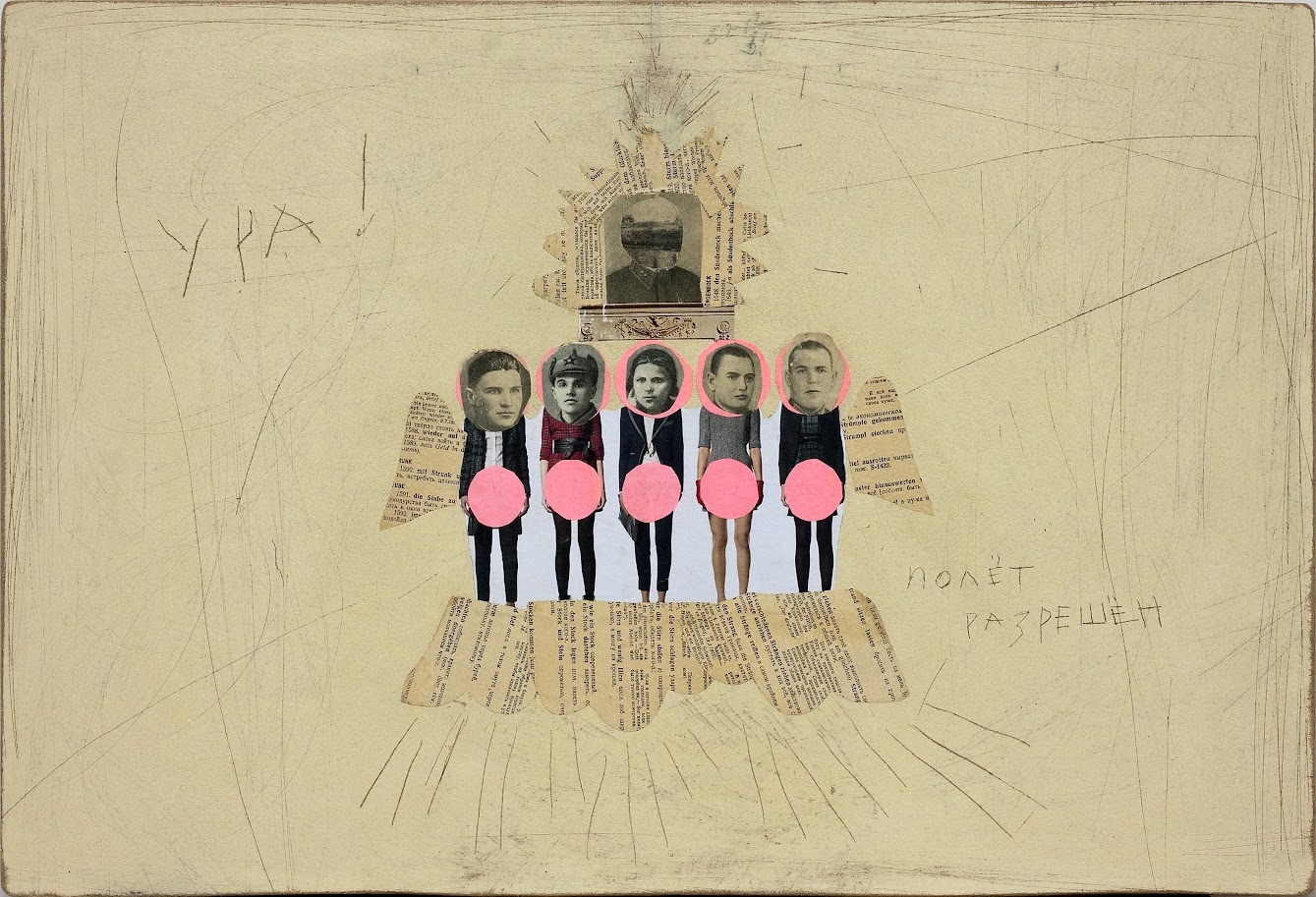
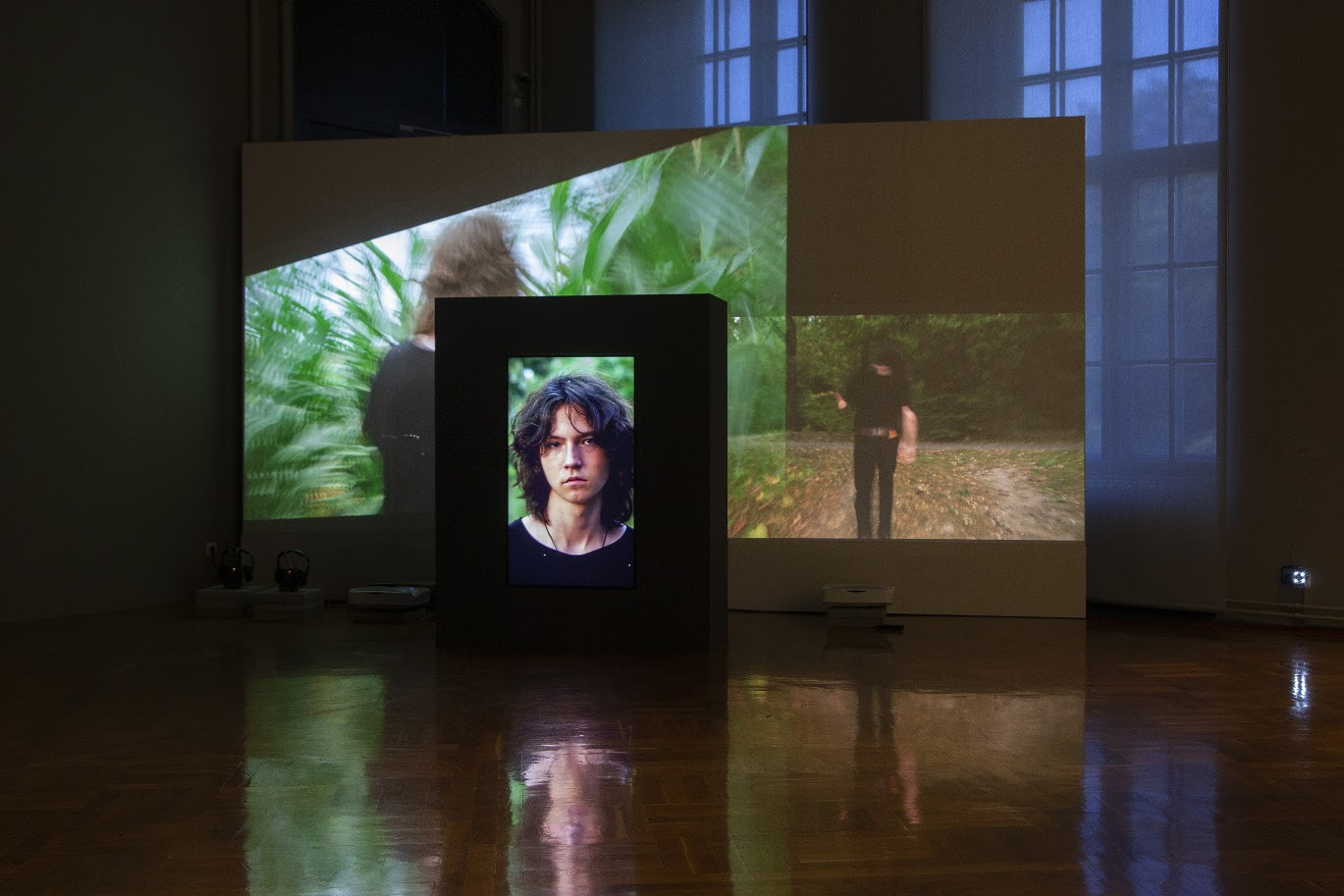
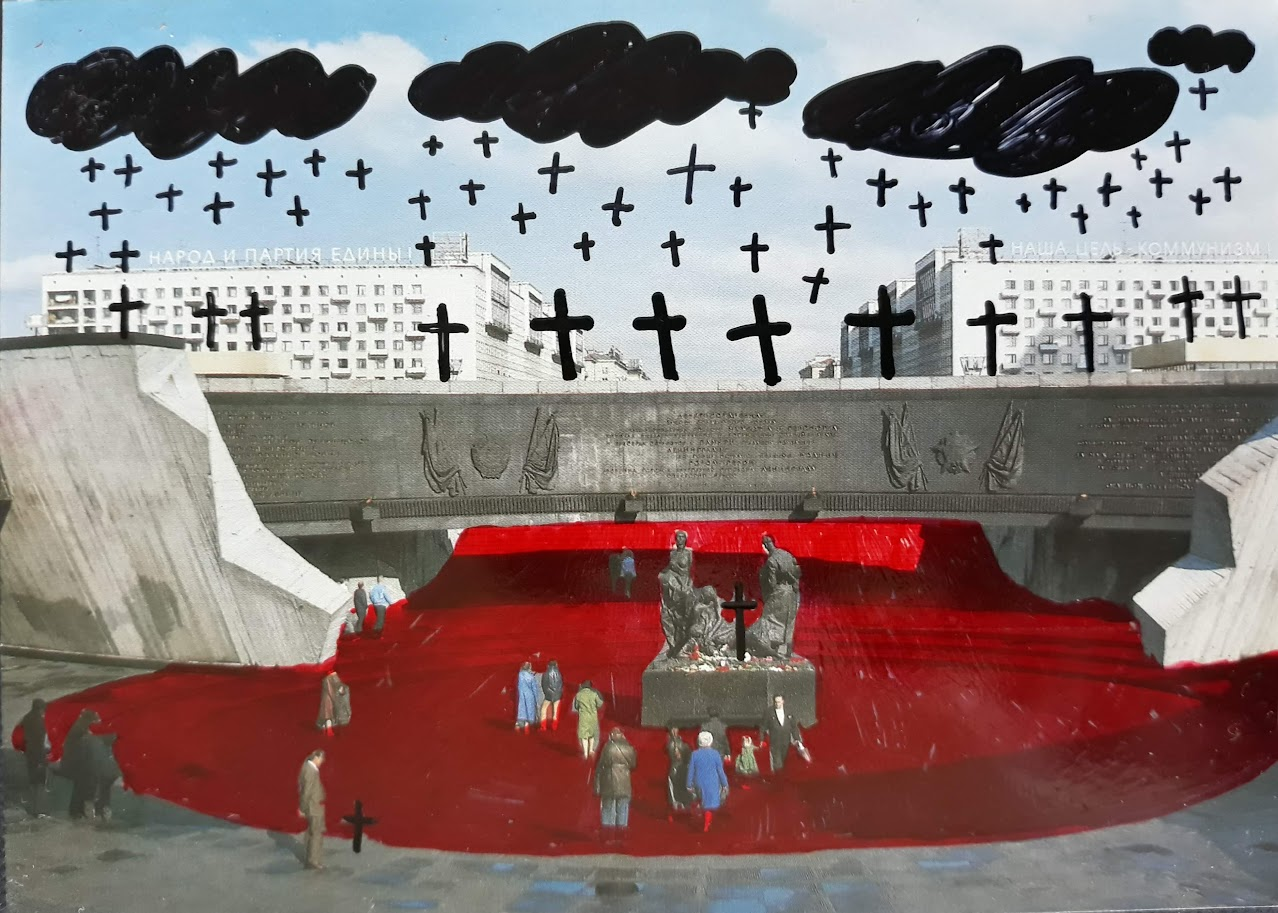
Collage was my personal discovery and what initially caught my attention was its total absence of rules–an anarchy I gladly embraced in the works of nonconformist artists like Timur Novikov and Vladislav Mamyshev Monro, and the early Dadaists. Visually, I was drawn to the spontaneity, eclectism, absurdity, and juxtaposition of the incompatible.
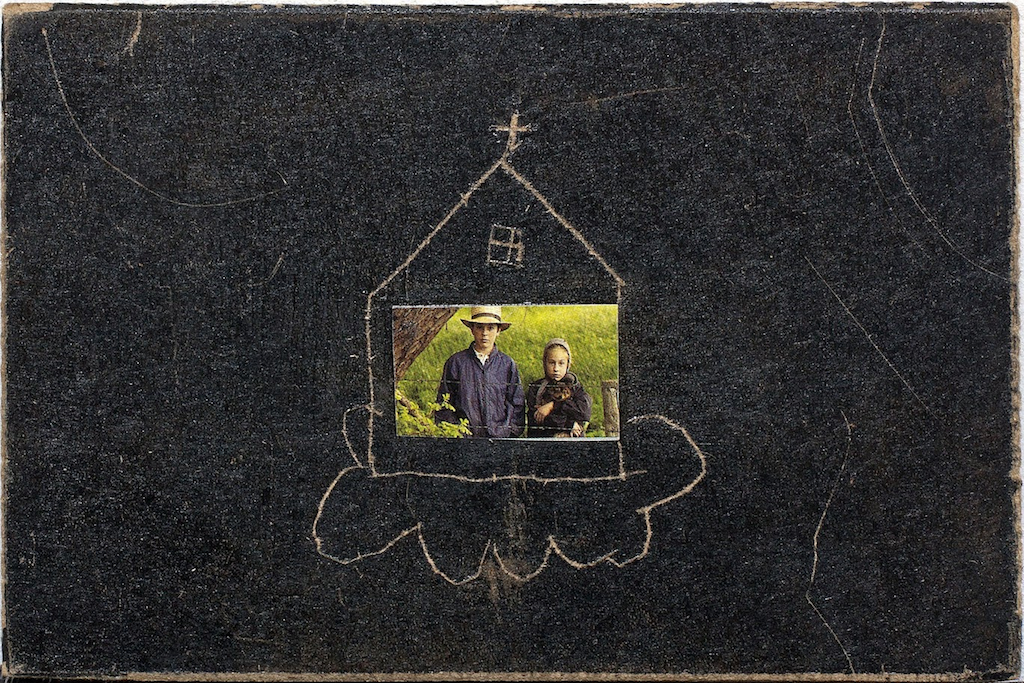
I deliberately turned to collage during my final year at the Academy, when I realized that relying solely on my »favourite« set of tools and imagery was… already a bit boring for me. So, I began incorporating fabric and paper into my oil paintings, before eventually moving on to pure collage and art books containing my own texts.
By the way, my very first art book was a romantic present to my future husband and fellow artist Mikhail Gulin, whom I really wanted to impress with my artistic and literature skills. I think it was exactly then when I fully grasped the potential of collage and the absolute freedom it grants in bringing together colors, forms, textures, and words. To use a culinary metaphor: in art I value spices above everything else! As a spectator, I can appreciate plain, bland art, but I could never create it myself.
At this stage of my career, collage has also become a cornerstone of my teaching practice. I find it to be the perfect tool for introducing people to art–it allows students to feel free and, in a good way, unburdened by expectations. While trying collage, students of any age can learn something about themselves before moving to experiments with other media. They feel relaxed and accepted.
I realized this twenty-five years ago when I first began teaching: every child is inherently talented; you simply need to recognize and nurture that potential. I carried that mindset with me when I joined the faculty at Maxim Tank Pedagogical University. My goal was to identify gifted young people and support them. In general, I succeeded in this, though I did clash continually with the Belarusian educational system. I witnessed firsthand–this time from an educator’s perspective–what I had experienced as a student: the gap teachers create between themselves and their students, and a total rejection of innovation.
We have spoken earlier about resistance as a central theme in my art, and I bring that exact stance to my pedagogy. I view every student as exceptional, possessing a unique trajectory. As an educator, my job is to help them uncover that potential. Art is how I find–and how I am also found by–»my« people.
After graduating from the university, I launched an independent practice: a studio within the »Deferred Actions« workshop, where I worked with adults of all ages, who wanted to develop their artistic practice, find their own voice, and discover themselves. Four of those students eventually became professional artists, and together we mounted two major exhibitions.
This year, after receiving a Senate Weltoffens Berlin scholarship, I’m fortunate to continue this work in Berlin in collaboration with »Fem*HUB«, teaching art to displaced female non-artists from Belarus and Ukraine.
Our course, »Collage of Voices. Collective Art in Exile«, is divided into three thematic phases, each concluding with a group exhibition. I meet with Berlin-based women and help them articulate their experiences through art. Art cannot radically alter geopolitical realities, but it can propose alternative ways of interacting with the world and with oneself. And I find this vital. Moreover, these basic physical mechanics of collage–working directly with paper, fine motor coordination, and deep focus on a tangible object right in front of you–do wonders for stabilizing one’s psychological state.
What interests me most about this Berlin experience is also the sense of community–an attempt to create a space where women can share their ideas and thoughts. After all, for almost everyone involved, the context of our presence here is tied to the intense experience of living a completely different life.