»We All Deserve to Be at the Top«
Samir TimajChi, an Iranian musician and artist, talks about his artistic identity, repression, and hope for a better future.
Could you please tell us about your childhood? How was it to be raised in Iran?
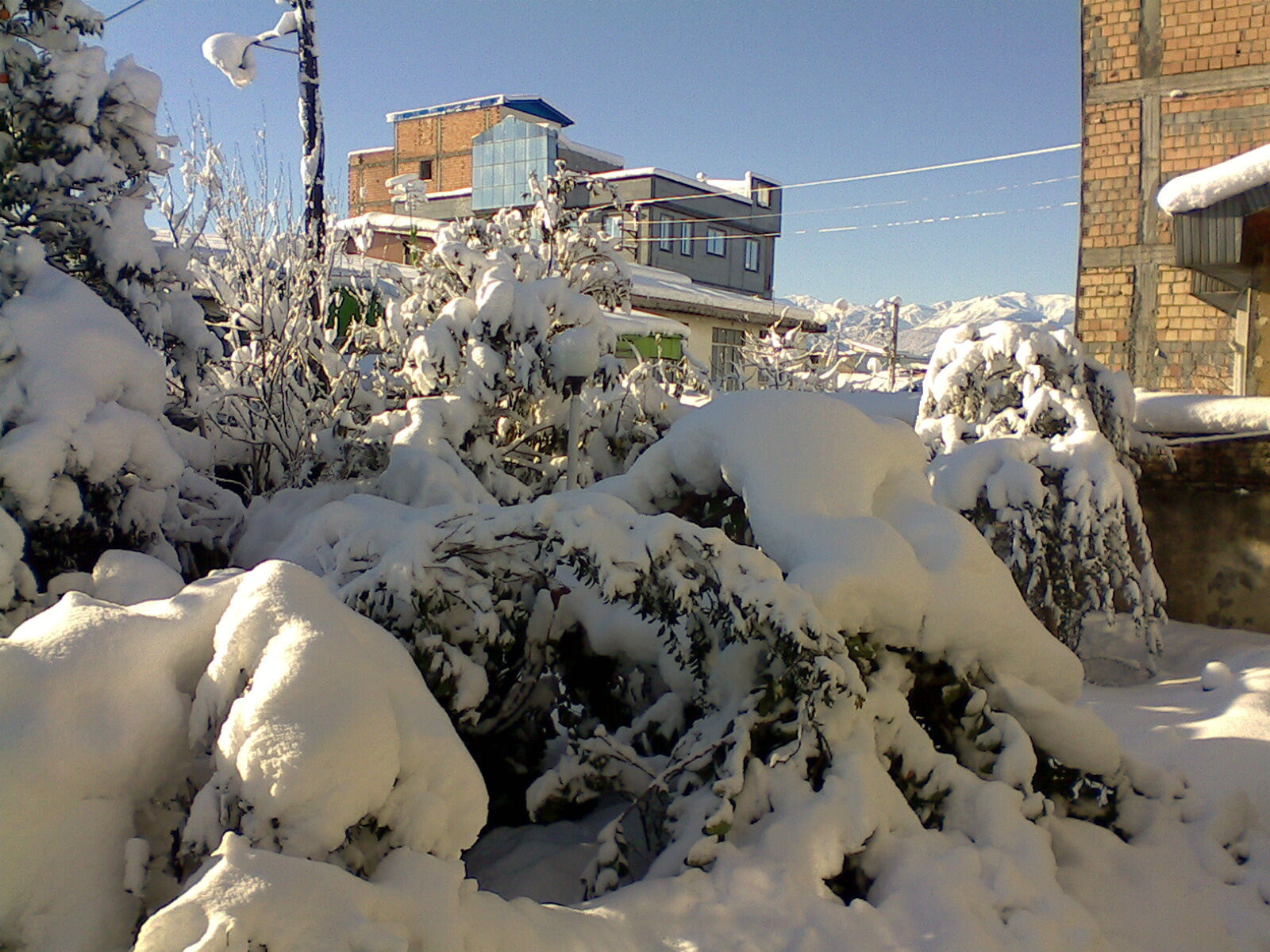
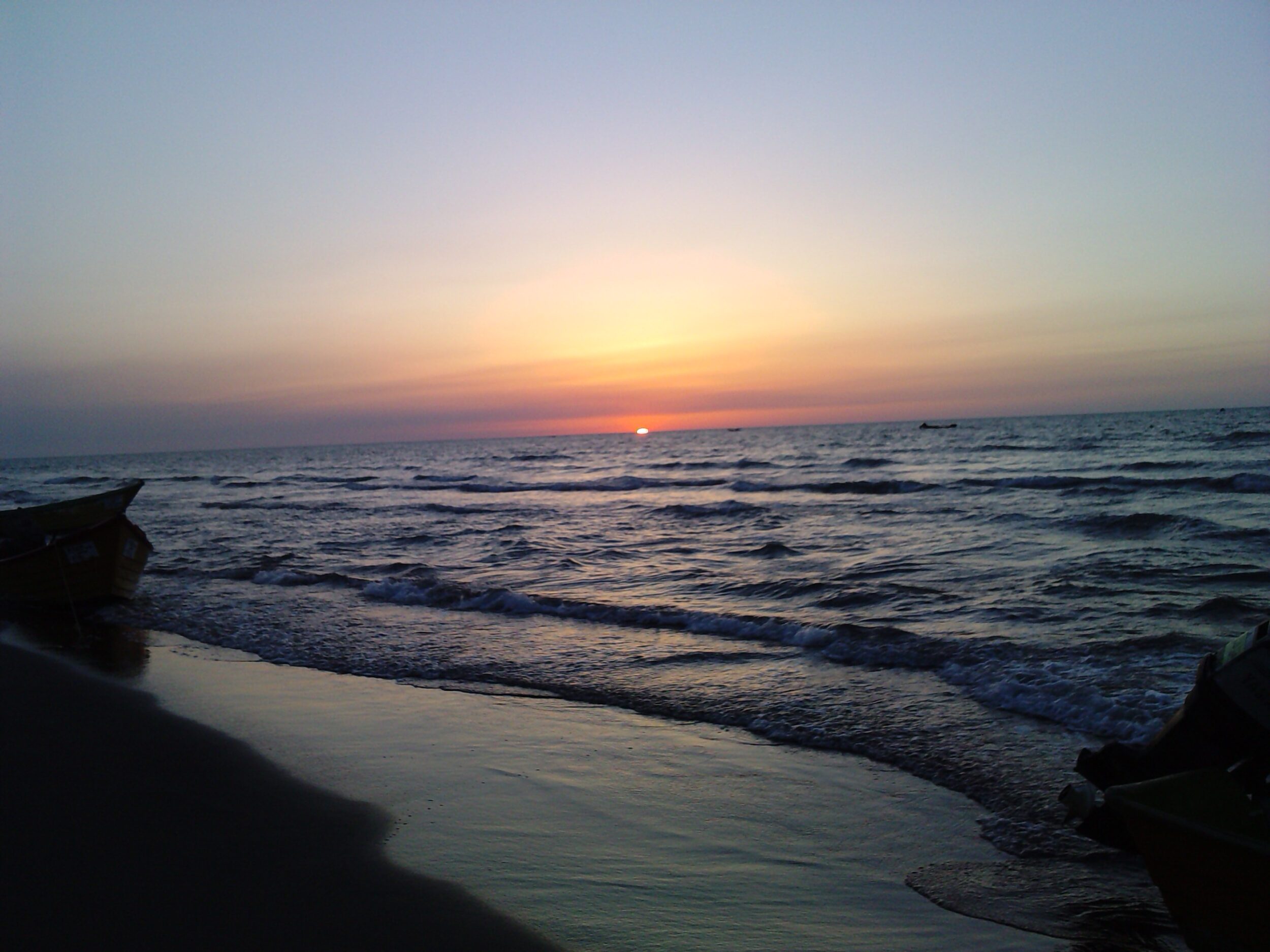
I was born into a family that can be considered working-class in Amol, a small city in northern Iran with 300.000 inhabitants. The area is green, and because it’s near the sea, the weather is neither extremely hot nor cold.
My father owned a repair shop for radios, televisions, tape players, and similar devices. Being in that environment, especially in his shop, was perhaps the most formative experience of my childhood. I spent my time trying to understand how electronics work and how these devices function, which gave me some early engineering experience. On the other hand, accompanying my mother to the health services where she worked also shaped my social relationships.
Due to my family’s belief in the Baháʼí Faith, and with my father from Tehran and my mother from Hamadan, it was always a bit hard to be accepted by the locals. In a sense, the experience of exile was embedded in me from birth.
I would like to ask you to tell a little bit more about the Baha’i Faith, about your religion. To be honest, I know almost nothing about it.
The Baháʼí Faith is one of the most dispersed religions on Earth (7-8 million Followers). In every country, you might find Baháʼís residing or missionaries traveling. It includes the 12 teachings such as the equality of men and women.
It began 183 years ago, founded by a man from Iran who was also in exile. Through Baháʼu’lláh’s teachings, we can understand a solution, or more specifically, a suggested path toward worldwide peace. There are many ideas on how to achieve this.
For example, at that time there was Marx, who talked about equality in salaries and the financial sector. But through Baháʼu’lláh’s teachings, Baháʼís believe that if everyone earned equally, it would decrease the motivation for progress, as later seen during communism in the Soviet Union. Instead, He suggests there should be a minimum basis, and from there, everyone can pursue whatever they wish in financial and economic matters, as long as everyone’s basic needs are met.
There are some spiritual practices. But as He says, spiritual practice is not something that should be forced. There is something more important: how we can live together in peace, without aggression. We need now more than ever before as the world has turned so aggressive, instead of talking and finding solutions, they are just shooting each other. So, this is my brief explanation of the Baháʼí Faith or philosophy.
Were Bahá’ís persecuted in Iran?
During the monarchy, it wasn’t easy to live as a Baháʼí. After 1979, we became one of the most persecuted minorities from the very beginning. We had many family members and friends who were executed in 1979 and the 1980s. Especially in the first few years after the revolution, many lost their jobs, homes and other assets but somehow this community managed to help each other to not collapse completely, economically and spiritually taking care of each other and, somehow, always being there for one another. This is one of the motivating ideas in my life, and I even find it influential in my compositions.
For instance, I also received support from individual Baháʼís during my time in St. Petersburg. I still don’t know who those people are. Believe me, I don’t know them, since they didn’t support me to gain fame or become known in the community, but because of their generosity.
Many Baháʼís left Iran right after the revolution. Another issue was that I couldn’t study, more precisely, I was banned from studying at any university in Iran. So, many Baháʼís, despite being good students in terms of grades and passion for studying and learning, weren’t and still aren’t able to attend universities and continue in higher education.
So we created an alternative. For example, most of what I learned about music theory was through the Baháʼí Institute for Higher Education (BIHE), which was our alternative for studying subjects like music, architecture, and other fields. It wasn’t officially recognized. The core was there, but we built it together as students and teachers, and we invited many professors from outside Iran to teach us online. It wasn’t easy, because authorities often arrested BIHE organizers.
I also contributed to BIHE. I was a teacher’s assistant and also organized home concerts at my place and my parents’ apartment. Something happened in my fourth year at BIHE; we felt it was becoming very dangerous. They came to our neighborhood and gathered information about us and what we were doing, because the sound of music was coming from inside, and I didn’t have much time.
Regarding that inability–that it was forbidden by the government for you to get an education–you decided to move to Saint Petersburg, yeah?
Unfortunately, as an Iranian, you can’t just take the next flight to any Schengen state, and many other places. Most countries have very strict visa rules.
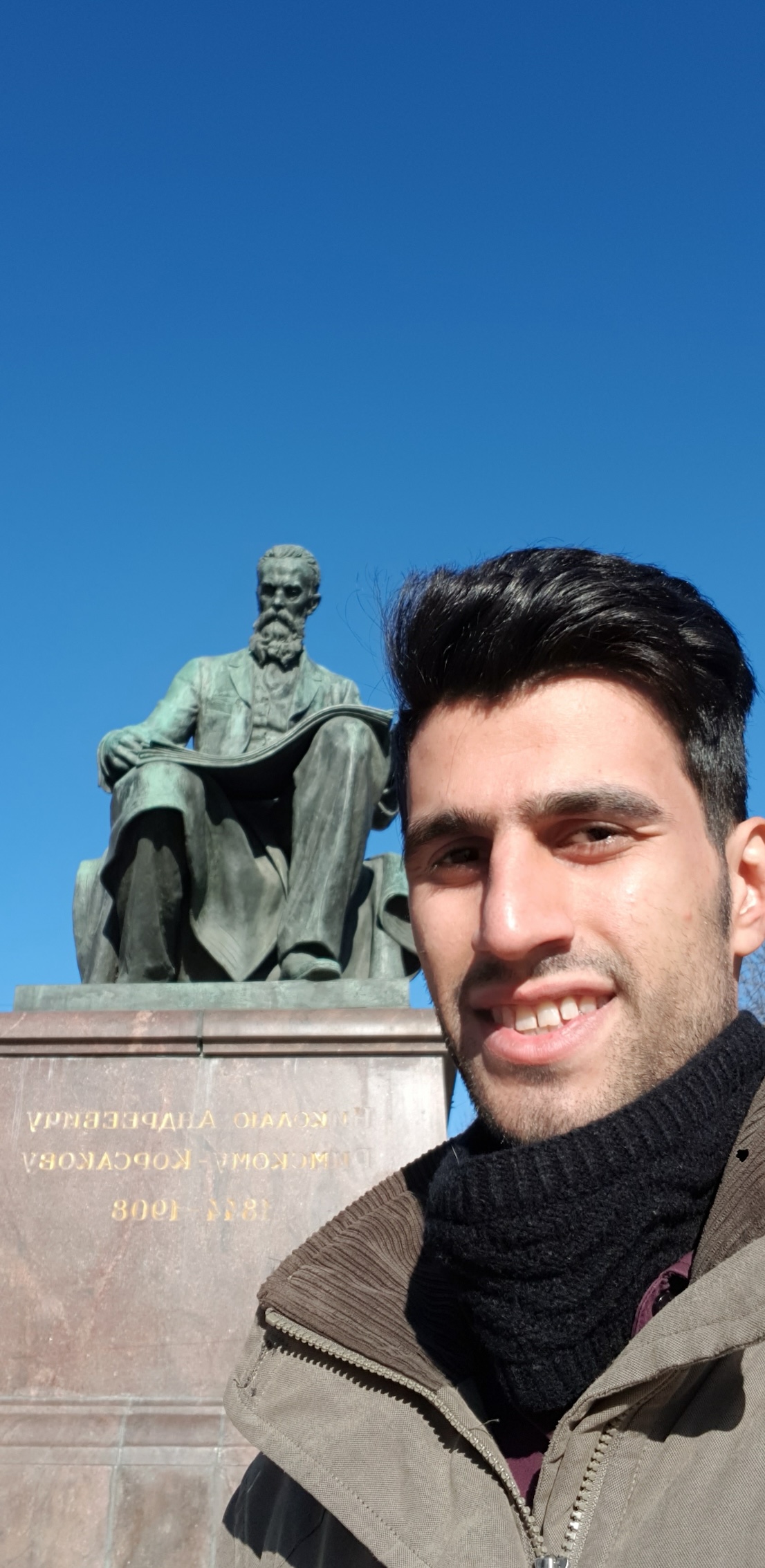
At that time, Russia was the easiest option. Also, inspired by my fantasies of Saint Petersburg’s culture from reading Dostoevsky, I decided to go to the Saint Petersburg Conservatory.
It was my first time studying in an official place, with classrooms and professors and all the things that happen in a normal university. At 27, I finally became a student in a formal setting.
How did you accept the news about the full-scale invasion of Russian troops in Ukraine in February 2022? What did you feel on that day? And what did you do after?
Well, on February 24, 2022–I mean, actually, by February 22, 2022, it was already clear something was going to happen, but we couldn’t expect that it happen so soon.
I couldn’t accept it. I was in denial because I couldn’t understand how someone could press a button and invade a country like Ukraine, especially since almost every family in Moscow or Saint Petersburg has relatives there.
In a taxi that day I opened the news, and replied, ‘Oh, FUCK!’ I remember a friend was there and she asked, ‘Samir, what’s your plan?’ I replied, ‘I will leave.’ I had no obligation to stay. Well, in fact, I once felt I had to stay in Iran and improve it, but I decided at some point to focus on my own progress because I might be able to do something in music. When people see my work in the future, they might say, ‘This person did something meaningful,’ though I know it’s not a perfect excuse.
I spoke to different people, and they helped me decide. I’m really proud of my decision because by March 2, 2022, I was already at the airport. I was deeply sad when I sat on the plane, I even cried because I knew it would probably take years before I could return.
Where did you fly?
I took a flight to Istanbul first because it was the only direct flight at that time. Then I went to a small city called Manisa, where my cousin lives. I spent one or two weeks there trying to sort out my Schengen visa, but I lacked the necessary documents in Turkey, so I couldn’t manage it.
Then I went to Iran (a moment I’d rather forget). They took my passport for no reason, just to scare me. After that, I applied for a new passport, and I got it. I don’t know why they did that. Luckily, the process went smoothly, and I got the visa from Norway with the help of a friend at a cultural residency, so I went to Norway, and it was a really good two weeks in Trondheim. It was cold there, and I really needed that time.
Then I went to Germany and studied in Dresden, which was a fascinating time to understand the layers of cultural activities and how to promote myself as a composer in this vast, complex world. After finishing my studies in Dresden, I moved to Barcelona to continue my education.
What do you think about cultural sanctions on the examples of Iran after 1979 and Russia after the full-scale invasion of Ukraine in 2022, the countries you are related to?
I actually support sanctions to an extent for example, when an artist publicly amplifies the propaganda and whitewashes the cruelty of a regime like Kremlin or Islamic Republic.
But many other artists need support. I believe there’s a distinction: there’s a significant difference between Islamic Republic and Iran, and between Kremlin and Russia. There’s also a difference between collaborationist artists and independent artists. I’m sure many in the West share this view.
Since 1979, the Islamic Republic has tried to drastically oppress its people and isolate them from the outside world, rewriting history to manipulate them. Yet, we always found ways to access information, often through books, films, and music from before 1979, through satellite receivers, and mainly through the internet, where we could access content from outside at any moment.
There were moments when our internet access was shut down, and it was like hell– a digital blackout, which is a kind of sanction on the people by those regimes.
We all have read about these horrible repressions in Iran in the last months, in the last wave of the protest before the war between the USA and Iran has even begun. Do you have hope for the future for your homeland?
No one has a clear answer, and honestly, I’ve lost hope for a better future because war always makes things worse.
On the other hand, there was still a tiny chance that this regime could have improved after that 12-day war. When the ceasefire happened, they could have started treating their people better, opening up the system, and making life a little better for people through negotiation, diplomacy, and respect for their people. But again, you see, right after the Twelve-Day War, there were mass executions, suppression, and humiliation of the Iranian people–leading up to January.
That’s insane. I can’t cite exact numbers of victims because there are no official figures. The Islamic Republic claims around 3.000, Hrana confirmed 7.000 (plus 11,000 cases under evaluation), and other sources suggest up to 70,000. So we really don’t know the actual number.
I really can’t understand how they can just shoot and kill people. Right now, we see it in the Russia-Ukraine war, in the Iran-US/Israel war, in Palestine, Myanmar, Sudan, Venezuela: all over the world, aggression, war, massacres, and other atrocities. We, people, are losers for paying the cost of the war through our lives.
I may be hopeless about political progress, but I don’t let that affect my compositions and music. I need to document my observations and write them down so that future generations might realize, ‘This wasn’t how history portrayed it.’
How does your exile experience affect your compositional work?
It’s a back-and-forth process between the artist and their work. An artist’s life is in direct dialogue with their work.
My last few pieces, written toward the end of my time in Russia, were deeply influenced by the war because as someone living in Russia, you could feel something brewing, especially when engaging with society and observing the growing rise of nationalistic ideas.
In Germany, for example, I wrote a composition criticizing the cultural fund cuts. This was just before the German government cut cultural funding. You may recall the piece I wrote for orchestral instrument cases. It featured only zippers and locks, protesting the cuts by symbolizing instruments abandoned in their cases.
How do you reflect your complex identity in your art?
Whatever we discover about ourselves may be more complex than identity itself. I call it an ‘essentity’ (which is not inherited but discovered throughout our lives), like my preferred colors, tastes, smells, relationships, and character traits.
It’s about self-discovery. This self-knowledge exists, but it isn’t given to us. It comes from understanding ourselves and the environment we live in. This idea also appeared in a piece I composed in Germany, where I was constantly in dialogue with myself, and it became the concept for the composition. Yet, even when we understand so much about ourselves, we still manipulate our own character by addressing ourselves with different subject pronouns.
Due to identity crises or external pressures (for example, as an Iranian), I’m expected to behave a certain way. I believe there shouldn’t be such a generalization.
Let’s move to your new piece you present today at platformB. What’s it about? How did you work on it? How did you come to this idea?
The starting point was Belarus, but it expanded as I realized we share similar struggles under dictatorship.
I began working, and the piece evolved significantly. Over three years, I explored more than ten different ideas, and every time I started a new project from scratch for this 95-second piece.
Every time I engaged with platformB.art (reading interviews, watching statements, or observing colleagues’ projects), it transported me back to that era, making me think that my project is one piece of this collective puzzle. The concept is collaboration: each artist contributes one word to a shared narrative. At the same time, I’d like to admit that as a composer, I always want to compose a piece that stays in everyone’s mind.
There are many ‘B’ words: ‘begin,’ ‘beautiful,’ and ‘Belarus,’ as well. ‘Brilliant.’ Even ‘Baháʼí.’ In general, ‘being.’ Also many bad words (laughs). It covers many ideas.
I decided to explore a voice concept: recording sounds that don’t even exist in any language, replicating the phonemes of ‘B.’
In the videos, you only see lips (which symbolize human intellect), because through lips and mouths, we communicate. We can speak instead of throwing sticks or stones.
There are also color codes. As you may know, the current official flag of Belarus is designed by Lukashenko. The white-red-white flag is what I consider the true symbol of Belarus. You also see it here: these red lips at the center of a white background.
So I painted my face green for color masking in chromakey, with red lips exaggerated by lipstick, and audio/visually recorded each element separately. I then removed the face, leaving only the white-red-white color scheme
I have a question about parallels you may see between the situations and different countries we talked about already and Belarus and this brutal oppression of protests in 2020 that led to political persecution of a lot of people.
Based on my experience in Iran, I believe Belarus faces similar issues: civilians under dictatorship never experience a better life. This is the system’s goal. These regimes prioritize ideology over human life. That’s the core issue everywhere: they follow the same rigid, inhuman pattern.
From what we know, the Belarusian protests were peaceful, yet brutally suppressed. People were killed, captured… It was really horrible. It was all very aggressive (everything they did). But protests have persisted since the 1980s, even from the Soviet era. Since then, more people join each time. In Iran, for example, the 2009 protests over election results began and stayed only in Tehran. Later, the protests spread to other cities, and the more recent waves, such as ‘Women, Life, Freedom,’ were the nationwide movements.
Belarus follows the same pattern. Despite brutal oppression, it grows because people believe no one can force them to live as the regime demands.
This pattern is visible elsewhere: dictators often win because they control the army, weapons, and resources. But the people only need to win once, and that ends the dictatorship.
What supports you in this exile situation? What are your personal secrets to keep yourself composing?
My relationship with my partner keeps me going. We have fun together in our daily life, like cooking, experiencing unique and even crazy things. That’s my greatest motivation right now. Having a partner, a »buddy« to share experiences, discoveries, and thoughts with, is invaluable. We collaborate intellectually: she’s the first to see my work, and I’m the first to see hers. Simply living together keeps me moving forward.
Photo Credits: Samir TimajChi